Clipping guide
Clipping for money: three ways to get paid for short clips
Clipping for money means cutting long videos, such as podcasts, streams and interviews, into short vertical clips and getting paid for them. There are three ways to do it: post clips for brands that pay per view, edit clips for creators who pay you directly, or clip your own long videos and earn from the platforms. This guide explains how each one pays, what you need to start, and the rules and risks that decide whether you actually get paid.
The short answer
If you have no videos and no audience, start with paid clipping campaigns. A brand or creator supplies the footage and a rate per 1,000 views; you post clips on your own accounts and get paid for approved views. Whop Content Rewards and Vyro are two platforms that run these campaigns.
If you can already edit well, sell clipping as a service to creators who have long videos but no time to cut them.
If you make long videos yourself, clip them into Shorts, TikToks and Reels to grow your channel and, once you qualify, earn from YouTube's or TikTok's creator programs.
None of these pays for views alone. Campaign clips must pass review, clients pay for clips they accept, and platform programs have eligibility rules and originality policies.
Three ways to make money clipping
The three routes differ in who pays you, what you need first and how soon money can arrive.
| Way | Who pays | What you need | Main risk |
|---|---|---|---|
| Paid clipping campaigns | The campaign owner, through a platform such as Whop or Vyro, per 1,000 approved views | Social accounts on the accepted platforms and an editing tool | Rejected clips, low views and budgets that run out |
| Clipping service | A creator or business, per clip or per month | Editing skill, sample clips and a way to find clients | Finding clients and agreeing on rights and revisions |
| Your own long videos | YouTube or TikTok creator programs once you qualify, plus any sponsors or products you promote | Long-form content you own | Eligibility thresholds take time to reach |
Way 1: Clip for brands on paid-per-view campaigns
This is what most people mean by clipping for money. A brand, creator or app funds a campaign, provides long-form footage and sets a rate per 1,000 views. You cut the footage into short vertical clips, post them on your own TikTok, YouTube Shorts, Instagram or X accounts, and submit the post links. The campaign owner reviews each post against the brief and approved posts are paid by views.
Whop Content Rewards is one of the largest marketplaces for these campaigns. Each campaign sets its reward rate, budget, minimum and maximum payout per video, and accepted platforms, and approved earnings go to your Whop balance. You can browse current campaigns, with their rates and number of creators, on the Content Rewards Discover page at contentrewards.com without signing in.
Vyro works the same way: each campaign sets a rate per 1,000 views, posts must be approved and pass a minimum view threshold, and earnings stop when the budget runs out. Vyro lists Instagram, TikTok, YouTube Shorts and X as supported platforms, requires the ad disclosure set in each brief, and pays out weekly through Stripe or PayPal once you have at least $10, depending on your location (checked October 2026).
Some campaigns also run inside Discord servers. Check who funds a campaign and how payouts are verified before you put hours into it.
How campaign pay is calculated
The basic calculation is views ÷ 1,000 × the reward rate. At $1 per 1,000 views, a clip with 50,000 approved views earns $50.
Three limits change that number. A minimum payout or view threshold means small posts earn nothing until they reach it. A maximum payout caps what one viral clip can earn: in Whop's own example, at $3 per 1,000 views and a $3,000 cap, a video stops earning at one million views. And when the campaign budget is spent, new views stop earning, even on clips you have already posted.
Only approved posts count. A clip that breaks the brief, for example by missing a required tag or disclosure, earns nothing however many views it gets.
Way 2: Sell clipping as a service
Many podcasters, streamers, coaches and companies record long videos every week but do not have time to cut them. You can offer them a fixed number of clips per episode or per month.
Start with a small sample set. Ask a creator for permission to clip one episode, or practice on footage with a license that allows reuse, and show the clips with their source time ranges. Agree in writing on the number of clips, turnaround time, revision rounds, who posts the clips and who owns the edited files.
This route pays for your work rather than for views, so income is more predictable once you have clients. The hard part is finding them; clipping campaign results, such as approved clips and their views, make a useful portfolio.
Way 3: Clip your own long videos
If you already record podcasts, streams, lessons or interviews, clipping them is the cheapest way to reach new viewers on Shorts, TikTok and Reels, and some of those viewers come back for the full videos.
The platforms pay creators directly once they qualify. On YouTube, the Partner Program requires 1,000 subscribers plus either 4,000 qualified watch hours on long videos in the last 12 months or 10 million qualified Shorts views in the last 90 days. Monetizing creators keep 45% of the Shorts ad revenue allocated to them. TikTok's Creator Rewards Program pays eligible creators for qualified views on original videos longer than one minute; whether you qualify depends on your country, age, followers and recent views, and TikTok shows it in your creator tools.
Many creators earn more from what their clips lead to than from ad revenue: sponsors, products, courses or client work. A clip that sends viewers to the full episode can be worth more than its own views.
Can you clip other creators' videos on your own channel?
Not for platform payouts, in most cases. YouTube's reused content policy excludes channels that repurpose videos already online without adding significant original commentary, and it applies even if you have permission from the original creator. Compilations with little or no narrative are not allowed to monetize, and YouTube does not count Shorts views it considers ineligible, such as unedited clips of others' movies or TV shows.
That is why paid campaigns exist: the footage owner pays you per view instead of the platform. If you want to clip someone else's videos, join their campaign or work for them as a service. Posting their clips on your own monetized channel without permission can lead to copyright claims as well as rejected monetization.
What you need to start
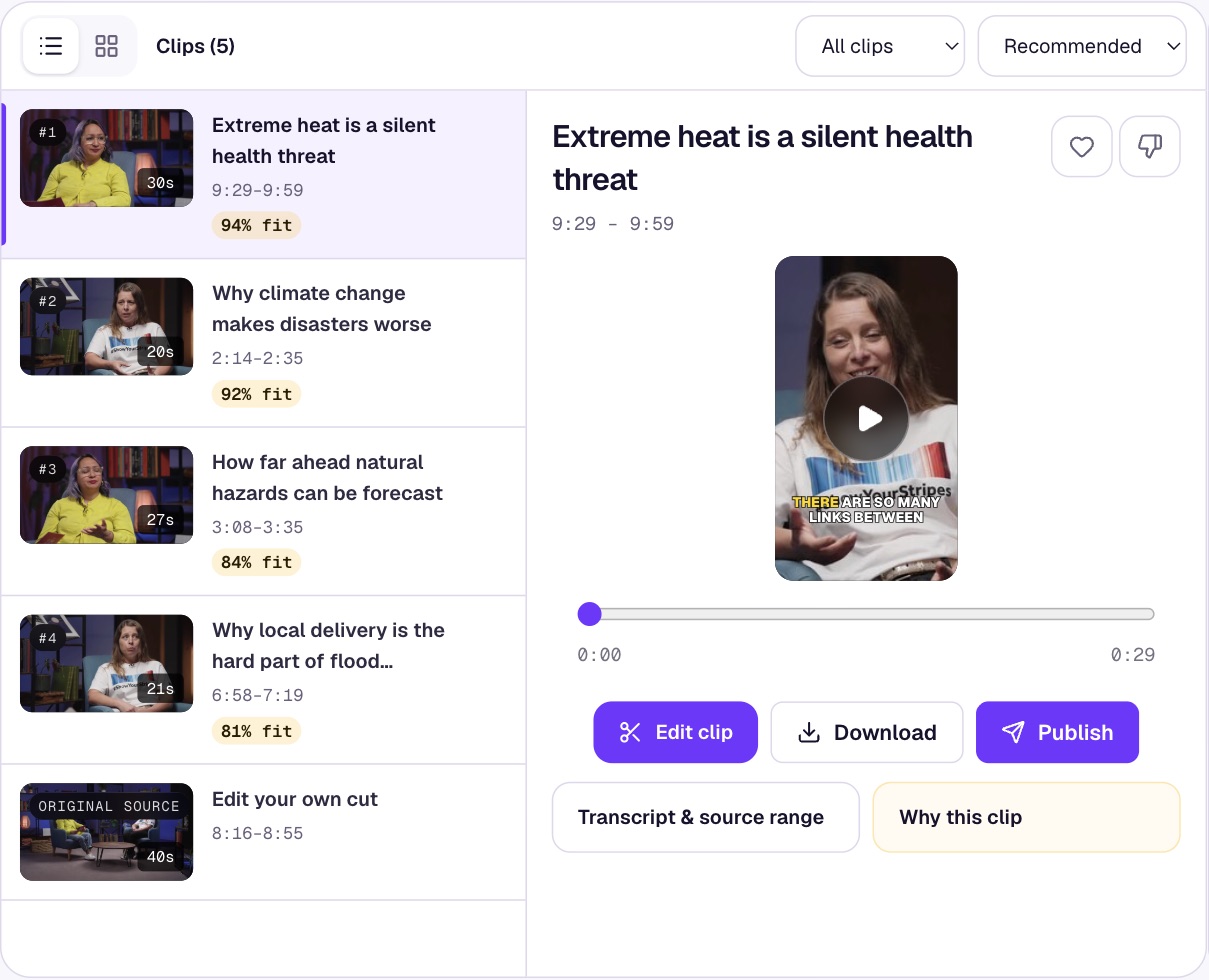
You do not need expensive equipment. Most clippers start with a phone or laptop and free accounts.
How much do clippers make?
There is no typical income. Earnings depend on the rates you accept, how many of your clips are approved and how many views they get. Campaign rates are set per campaign; for example, Whop's documentation uses $3 per 1,000 views in its payout example, and Vyro's campaign listings showed $1.50 to $2 per 1,000 views when we checked in October 2026.
A realistic way to estimate is to work backward from views. At $1 per 1,000 views, $100 needs 100,000 approved views. New accounts often post many clips before one performs well, and clips under a campaign's minimum earn nothing.
Treat screenshots of large monthly earnings as marketing. Track your own approval rate and views per clip for a few weeks before you spend money on tools or courses.
Scams and risks to watch for
Clipping is a real way to earn, but a few patterns cost new clippers time or money.
Frequently asked questions
Quick answers to common questions about clipping for money.
What is clipping for money?
Clipping for money means cutting long videos into short vertical clips and getting paid for them, either per 1,000 approved views in a brand's campaign, per clip by a creator who hires you, or through platform creator programs when you clip your own videos.
Is clipping for money legit?
Yes, when the footage owner pays for it. Platforms such as Whop Content Rewards and Vyro hold campaign budgets and pay approved clips by views. Earnings are not guaranteed: clips must follow each brief and reach any minimum payout.
Do I need followers to start clipping?
Not for paid campaigns, which pay by the views each approved post receives rather than by follower count. Platform creator programs such as the YouTube Partner Program and TikTok Creator Rewards do have follower and view requirements.
How much do clipping campaigns pay per 1,000 views?
Each campaign sets its own rate. Whop's documentation uses $3 per 1,000 views as an example, and Vyro campaigns we saw in October 2026 paid $1.50 to $2 per 1,000 views. Minimum and maximum payouts and the remaining budget matter as much as the rate.
Can I make money clipping famous YouTubers' videos on my own channel?
Usually not. YouTube's reused content policy excludes clips without significant original commentary, even with the creator's permission. Clip their videos through their own paid campaigns, or with an agreement to work for them.
Do I need to show my face?
No. Clipping campaigns and clipping services use someone else's footage, so you never appear on camera unless a campaign asks for original user-generated content.
Next step: Make and review a podcast clip with Scribix.